ABSTRACT
This study proposes an optimization strategy for the over-current protection (OCP) parameters of a lithium iron phosphate (LiFePO₄, LFP) battery system used in electric golf carts operating under high motor-load conditions. Real-world hillclimbing tests were conducted under four clearly defined payload/passenger conditions to analyze the transient discharge-current pro-file, voltage sag, and cell-temperature response. The maximum discharge current reached -238.2 A under the 200 kg cargopayload and one-passenger condition, and the current interval exceeding 150 A lasted up to 27 s. The maximum instantaneous power was 11.05 kW. Thermal analysis showed that the cell-temperature rise was within 2°C and the maximum measured cell temperature was 22.3°C. Linear regression of voltage and current yielded R² = 0.9368 and dV/dI = 0.0126 Ω, which was used as the DC internalresistance estimate. Based on these quantitative results and the cell specification limit of 300 A continuous discharge, the OCP threshold was reviewed from 250 A to 280 A to improve driving continuity while remaining below the allowable continuous-discharge current. EIS-based SOH estimation and the AI-BMS variable protection logic are presented as an extension framework for reflecting temperature and aging effects in future OCP-setting decisions.
-
KEYWORDS: LiFePO4 battery, Battery management system (BMS), Over-current protection (OCP), Dynamic load condition, Hillclimbing operation, Parameter optimization, Electrochemical impedance spectroscopy (EIS)
1 서 론
최근 친환경 이동수단에 대한 수요 증가로 골프카트 및 전동 운반차의 동력원으로 리튬인산철(LiFePO₄, 이하 LFP) 배터리 채택이 확대되고 있다. LFP 배터리는 열적 안정성과 사이클 수명 측면에서 장점이 있으나, 경사로 등판, 고중량 적재 및 저속 고토크 주행 조건에서는 순간 방전전류 증가, 전압 강하 및 발열이 동시에 발생할 수 있다. 따라서 BMS의 보호 설정값은 셀 보호뿐 아니라 실제 운행 연속성까지 함께 고려하여 설정될 필요가 있다.
골프장 및 산업 현장의 전동 운반차는 경사 지형에서 탑승자와 적재물을 동시에 운반하는 경우가 많다. 이때 모터는 단시간에 높은 토크를 요구하며, 배터리 팩에는 150 A 이상의 고전류 부하가 반복적으로 인가될 수 있다. BMS의 과전류 보호(over-current protection, 이하 OCP) 임계치가 실제 운행 부하보다 낮거나 지연시간 설정이 부적절하면, 셀 손상 위험이 없는 정상 운행 조건에서도 전원이 차단되는 불필요한 보호 동작(nuisance tripping)이 발생할 수 있다[
1]. 이러한 차단은 등판 중 차량 정지, 재시동 지연 및 사용자 불편으로 이어져 운행 안정성과 시스템 신뢰성을 저하시킨다.
본 연구의 목적은 실제 등판 주행 데이터를 이용하여 전동 운반차의 동적 부하 특성을 정량화하고, 셀의 허용 방전 사양 및 실측 열·전기적 응답을 근거로 OCP 설정값의 적정 범위를 검토하는 것이다. 또한 EIS 기반 내부 파라미터를 활용한 SOH 추정 및 가변형 보호 알고리즘은 본 연구 결과를 확장하기 위한 향후 적용 방안으로 구분하여 제시한다.
2 이론적 배경 및 배터리 특성
2.1 LFP 배터리의 안전성 및 고율 방전
LFP 배터리는 열적 임계 온도가 높고 산소 방출이 적어 발화 위험이 낮으나, 고율 방전 시 내부 저항에 의한 전압 강하(Voltage Sag)와 줄 열(Joule Heat) 발생이 성능에 영향을 미친다[
3].
BMS는 션트 저항 또는 홀 센서를 통해 전류를 실시간 모니터링하며[
1,
2], 설정된 감지 임계치(Ilimit)를 일정 시간(Tdelay) 동안 초과할 경우 회로를 차단한다. OCP 설정값이 낮으면 보호 민감도는 높아지지만, 등판 시 일시적으로 발생하는 정상 고부하 전류까지 고장 상태로 판단할 수 있다. 반대로 설정값이 과도하게 높으면 셀 및 전력부품 보호 여유가 감소한다. 따라서 OCP는 셀 규격, 실측 피크 전류, 고전류 지속시간 및 온도 상승을 함께 고려하여 설정되어야 한다.
배터리의 내부 상태를 정밀하게 진단하기 위해 EIS가 사용된다[
5,
6]. 실제 배터리 전극의 불균일성을 반영하기 위해 커패시터 대신 상수 위상 요소(constant phase element, CPE)를 도입한 등가회로 모델을 적용한다[
5]. 임피던스 Z는 다음과 같은 물리적 파라미터로 구성된다.
R1 (오믹 저항): 전해질 및 접촉 저항
R2 (전하 전달 저항): 활물질 계면에서의 반응 저항[
6,
7]
n (눌림 계수): 나이퀴스트 선도의 반원이 눌린 정도를 나타내며 전극의 물리적 상태를 반영[
5,
7].
3 실험방법
3.1 대상 배터리 시스템 및 차량사양
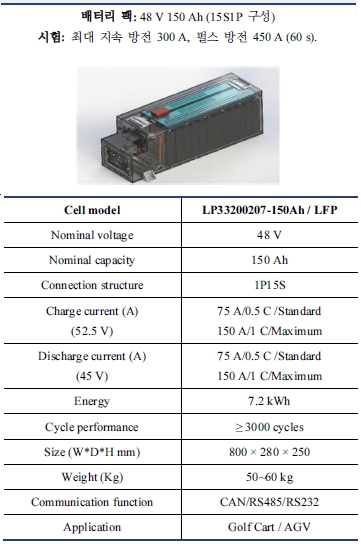
본 연구에 사용된 시스템은 48 V 150 Ah급 LFP 배터리 팩으로, 15S1P 구조의 LP33200207 셀(Chuzhou Lishen)을 탑재하였다[
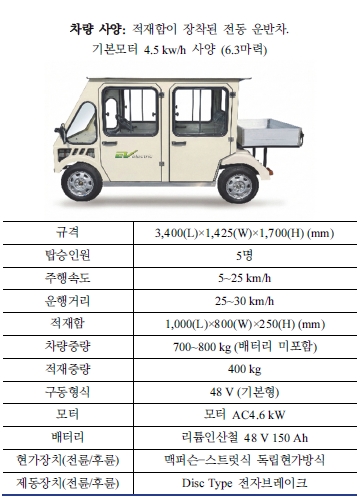
11]. 해당 셀의 규격서상 최대 지속 방전 전류는 2.0 C (300 A), 60초 이내의 펄스 방전 전류는 3.0 C (450 A)이다. 시험 차량은 4.6 kW AC 모터가 장착된 5인승 전동 운반차를 사용하였다.
시험은 적재 하중과 탑승 인원을 조합한 4가지 부하 조건에서 수행하였다. 적재 하중은 차량 적재함에 추가한 화물 하중을 의미하며, 탑승 인원은 운전자 또는 동승자를 포함한 인원 조건을 의미한다. 본 논문에서는 1인 조건을 약 100 kg, 2인 조건을 약 200 kg의 탑승자 하중으로 가정하였다. 따라서 각 조건은 ① 0 kg 적재+1인, ② 0 kg 적재+2인, ③ 200 kg 적재+1인, ④ 200 kg 적재+2인으로 구분된다.
모든 시험은 동일 차량, 동일 경사로, 동일 계측 장비 조건에서 수행하여 부하 조건별 전류·전압·온도 응답을 비교할 수 있도록 하였다. 실험은 구미 소재 형제파트너 경사로에서 수행되었으며, 데이터는 'SBT Pack Monitor'를 사용하여 1 Hz 샘플링 속도로 수집하였다. 측정 항목은 팩 전압, 팩 전류, 셀별 최고 온도, 최저 셀 전압 및 시간 이력 데이터이다.
본 연구에 사용된 배터리 시스템은 48 V 150 Ah급 LFP 배터리 팩이며, 15S1P 구조의 LP33200207 셀(Chuzhou Lishen)을 탑재하였다[
11]. 해당 셀의 공칭 전압은 3.2 V이고, 규격서 상 최대 지속 방전 전류는 2.0 C (300 A), 60s 이내의 펄스 방전 전류는 3.0 C (450 A)이다. 팩의 총 에너지는 7.2 kWh이며, CAN/RS485 통신을 통해 실시간 운행 데이터를 수집할 수 있도록 구성하였다.
등판 구간의 1 Hz 시계열 데이터에서 피크 전류, 150 A 초과 지속시간, 최저 셀 전압 및 셀 온도 상승폭을 산출하였다. 반복 주행 원자료가 확보된 항목은 평균(mean), 표준편차(SD) 및 표준오차(SE = SD/√n)로 정리하고, 그래프의 error bar는 표준편차(SD)를 기준으로 표시한다.
Table 3의 수치는 각 조건별 대표 주행 데이터이며, 반복 실험횟수(n)와 평균±SD 값은 원자료 확보 후 추가 표기한다.
온도 상승폭은 ΔT = Tmax − Tinitial로 정의하였으며, 전압–전류 선형 회귀의 기울기 dV/dI는 DC 내부저항 추정값으로 사용하였다. 단위는 전압 V, 전류 A, 전력 kW, 에너지 kWh, 온도 °C, 시간 s, 질량 kg으로 통일하였다.
4 결과 및 고찰
4.1 부하 조건별 동적 부하 프로파일 분석
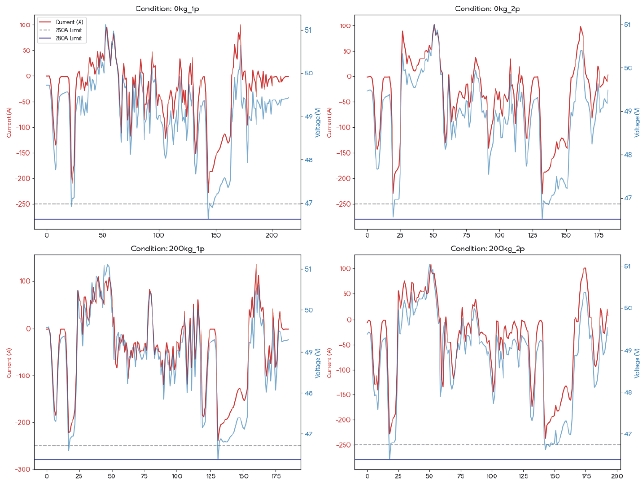
Fig. 1은 4가지 부하 조건에서 등판 주행 중 측정된 전류 및 전압 변화를 보여준다. 부하 조건은 적재 하중과 탑승 인원으로 구분하였으며, 각 조건의 피크 전류, 150 A 초과 지속시간 및 최저 셀 전압을
Table 3에 정리하였다. 이와 같이 조건 정의를 분리함으로써 적재물 증가와 탑승자 증가가 OCP 설정값 검토에 미치는 영향을 비교할 수 있다.
0 kg 적재+1인 조건에서 피크 전류는 −228.4 A, 150 A 초과 구간은 14 s로 측정되었다. 0 kg 적재+2인 조건에서는 피크 전류가 −230.5 A, 150 A 초과 지속시간이 15 s로 나타났다.
200 kg 적재+1인 조건에서 최대 피크 전류는 −238.2 A, 150 A 초과 고부하 지속시간은 27 s로 측정되었다. 200 kg 적재+2인 조건에서는 피크 전류 −236.7 A, 150 A 초과 지속시간 25 s가 나타났다. 따라서 본 시험 범위에서는 적재 하중 200 kg 조건에서 고전류 지속시간이 증가하였고, 기존 250 A OCP 설정값과 최대 피크 전류 사이의 전류 여유는 11.8 A로 제한적이었다.
4.2 전압 강하 및 내부 저항 추정
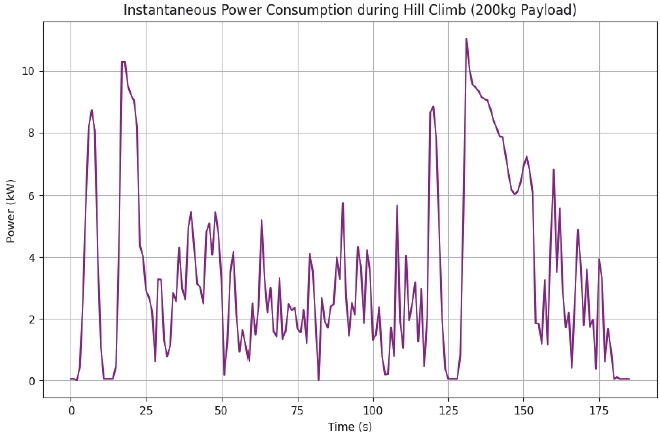
Fig. 2의 전력 프로파일 분석 결과, 최대 출력은 11.05 kW로 산출되었다.
전압–전류 선형 회귀 결과, 결정계수 R² = 0.9368, 기울기 dV/dI = 0.0126 Ω로 산출되었다. 이는 시험 구간에서 전류 증가에 따른 저항성 전압 강하가 지배적으로 나타났음을 의미하며, 단기 등판 조건에서 DC 내부저항의 급격한 증가 징후는 관찰되지 않았다[
8].
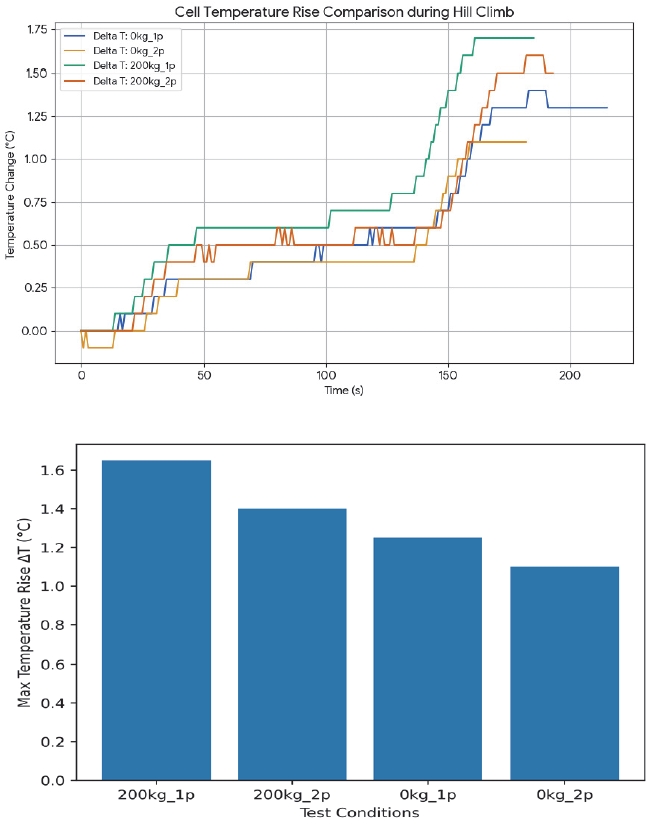
Fig. 3에서 확인되듯이, 200 kg 적재 상태의 등판 주행에서도 셀 온도 상승폭(ΔT)은 2°C 이내로 유지되었다. 최고 온도는 22.3°C로 측정되었으며, 본 시험 조건에서는 온도 상승이 OCP 임계치 상향 판단의 제한 요인으로 작용하지 않았다.
4.4 파이썬 기반 임피던스 파라미터 추출
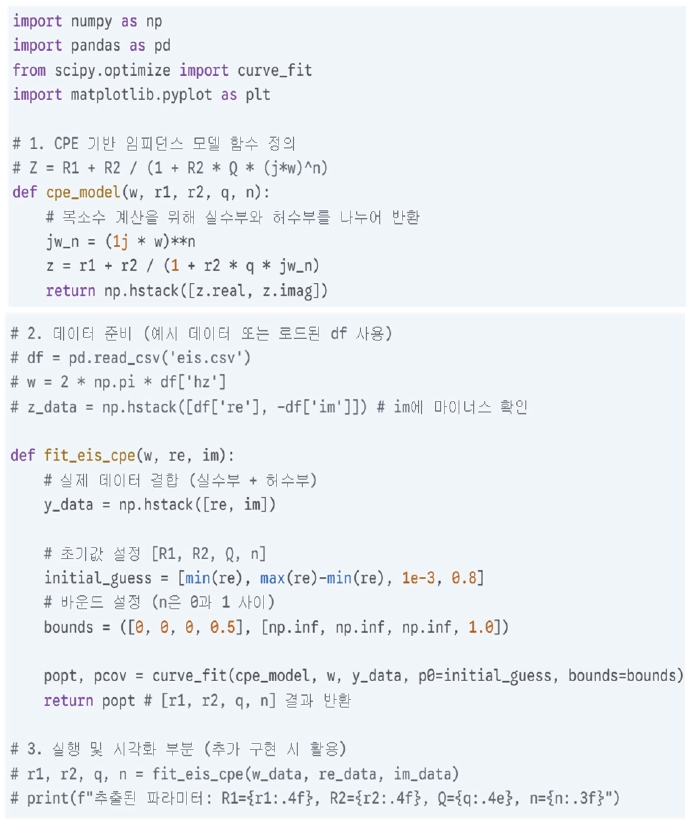
EIS 데이터를 파이썬의 scipy.optimize 라이브러리를 활용하여 비선형 피팅함으로써 R1, R2 및 n값을 추출하였다.
R2 (전하 전달 저항): 등판 시의 주요 전압 강하 원인으로 식별한다.
n (눌림 계수): 전극의 건전성을 나타내며, 고부하 반복 후 n값의 변화 여부를 통해 전극 계면 불균일성 변화를 판단하는 지표로 활용한다.
5 EIS 기반 SOH 해석 및 가변형 BMS 보호 알고리즘 제안
5.1 본 연구에서 확인한 EIS 기반 내부 파라미터 해석
본 절에서는 등판 시험 결과와 구분하여, EIS 기반 SOH 추정에 활용 가능한 내부 파라미터의 해석 결과를 정리한다. EIS 분석은 Nyquist plot과 등가회로 피팅을 통해 전하 전달 저항(R₂) 및 CPE 지수(n)의 변화를 확인하는 데 목적이 있다. 여기서 도출된 R₂와 n은 현재 논문의 OCP 임계치 산정에 직접 적용한 실차 결과라기보다, 향후 온도·노화 상태를 반영한 가변형 보호 알고리즘의 입력 변수로 활용 가능한 후보 파라미터로 제시한다.
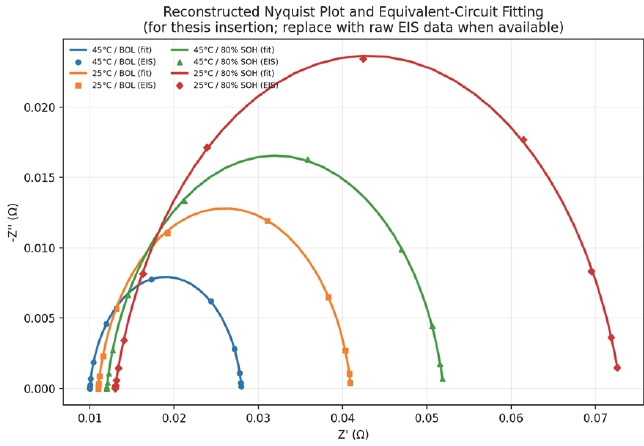
(1) 온도 감소에 따른 R₂ 증가: 온도 변화가 배터리 내부 임피던스 특성에 미치는 영향을 분석한 결과, 온도가 45°C에서 25°C로 낮아질수록 Nyquist plot의 중주파수 영역 반원 직경이 증가하는 경향이 나타났다. 이는 등가회로 모델의 전하 전달 저항(R₂)이 저온에서 증가함을 의미하며[
8], 저온 조건에서 동일 전류 부하가 더 큰 전압 강하를 유발할 수 있음을 설명한다.
(2) 노화 진행에 따른 R₂ 증가: 초기 상태(BOL) 대비 80% SOH 조건에서는 Nyquist plot의 반원 직경이 확대되는 경향이 나타났다. 이는 노화가 진행되면서 계면 반응 저항이 증가하고, 충·방전 과정에서 분극 및 발열 가능성이 커질 수 있음을 의미한다[
6,
7].
(3) CPE 파라미터 n 감소: 노화 또는 온도 조건 변화에 따라 Nyquist plot의 반원은 이상적인 반원에서 벗어나 눌린 형태(depressed semicircle)를 보일 수 있다.
이 현상은 CPE(constant phase element)의 지수 파라미터 n 감소와 관련된다[
5,
7]. n 값은 전극 계면의 불균일성 또는 반응 분포의 불균일도를 나타내는 지표로 해석할 수 있으며, 노화에 따른 전극 표면 변화나 온도 조건 변화가 심화될 경우 n 값 감소로 나타날 수 있다.
정리하면, 본 연구에서 EIS 해석을 통해 확인한 핵심 사항은 저온 및 노화 조건에서 R₂가 증가하고 n 값이 감소하는 경향이다.
이 결과는 실차 등판 데이터로부터 도출한 280 A OCP 설정 값과는 구분되는 보조 해석이며, 향후 배터리 상태 기반 가변 OCP 알고리즘 설계 시 온도·노화 보정 변수로 활용될 수 있다.
해석 포인트: ① 저온일수록 반원 직경 증가 → 전하 전달 저항 R₂ 증가, ② 80% SOH 조건에서 반원 확대 및 눌림 심화 → 계면 불균일성 증가, ③ 동일 온도에서 BOL 대비 80% SOH의 n 값 감소 → SEI 성장과 전극 열화 반영.
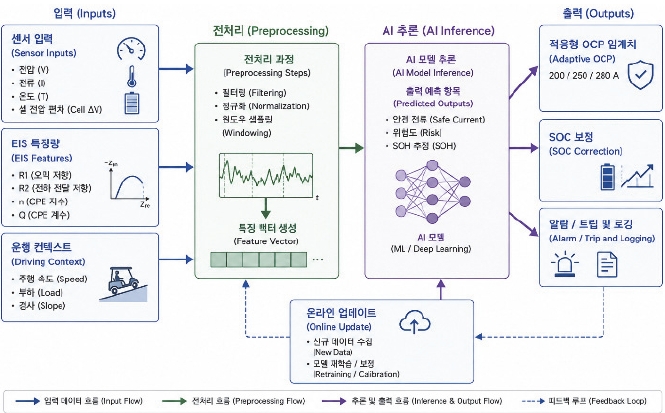
본 절의 AI-BMS 구조는 본 연구에서 즉시 검증된 실험 결과가 아니라, 실차 등판 데이터와 EIS 기반 내부 파라미터를 결합하여 향후 구현할 수 있는 확장 알고리즘 제안이다. 제안 구조는 센서 데이터, EIS 특징량 및 운행 부하 정보를 입력으로 받아 safe current limit, risk score, SOC 보정치, SOH 추정치를 산출하는 형태로 구성된다[
4].
5.2.1 입력 데이터 통합 구조(Sensor, EIS, Context)
제안 알고리즘은 센서 데이터(Sensor Inputs), EIS 특징량(EIS Features), 운행 환경 정보(Driving Context)를 동시에 활용하는 구조이다. 실시간 센서 데이터는 현재 상태를, EIS 특징량 은 내부 저항 및 열화 상태를, 운행 컨텍스트는 향후 부하 변동 가능성을 반영한다.
실시간 물리량: 센서 데이터를 통해 배터리의 실시간 동작 상태(전압, 전류, 온도)를 정확히 파악할 수 있다.
전기화학적 특성: EIS 특징량(R₁, R₂, n, Q 등)은 단순 전압·전류·온도 계측만으로는 파악하기 어려운 전하 전달 저항, 이온 확산 특성 및 열화 상태 변화를 정량적으로 제공한다. 따라서 SOH 추정 및 OCP 보정 로직의 상태 변수로 활용될 수 있다[
6,
7].
운행 컨텍스트: 차량 속도, 탑승자 수, 적재 하중, 도로 경사도 등의 운행 정보는 배터리에 인가될 부하 패턴을 예측하는 데 활용된다. 향후에는 이 정보를 기반으로 보호 임계치와 지연시간을 고정값이 아닌 상태 기반 변수로 조정할 수 있다.
5.2.2 데이터 전처리 단계(Preprocessing)
센서나 EIS 측정 장비로부터 얻은 원시 데이터는 노이즈를 포함하거나 단위 및 스케일이 상이하여 AI 모델에 직접 입력하기에 부적절할 수 있다.
구조도에 명시된 전처리는 AI 모델의 입력 품질을 확보하기 위한 절차이다[
12].
Filtering: 센서 데이터에 포함된 고주파 노이즈 등을 효과적으로 제거하여 신호의 품질을 향상시킨다.
Normalizing: 입력 데이터의 스케일을 통일함으로써 특정 특징량이 모델 학습 과정에 지배적인 영향을 미치지 않도록 방지한다.
Windowing: 시계열 배터리 데이터를 일정 시간 구간으로 분할하여, 모델이 과거 전류·전압·온도 변화 이력과 이후 상태 변화를 함께 학습할 수 있도록 한다.
5.2.3 다중 출력 기반 BMS 기능 구현(Multi-Output Logic)
제안 구조는 단일 상태값이 아니라 Safe Current Limit, Risk Score, SOC Correction, SOH Estimation의 4가지 출력을 동시에 산출하도록 설계할 수 있다. Safe Current Limit는 현재 온도, SOH 및 운행 부하를 고려하여 허용 가능한 전류 한계를 제시하며, 향후 가변형 OCP 알고리즘의 핵심 출력값으로 활용된다.
Risk Score는 배터리 열화 상태, 부하 패턴 및 온도 분포를 종합하여 위험도를 점수화하는 출력값이다. SOC Correction은 전류 적산 방식에서 발생하는 누적 오차를 전압 및 모델 기반 정보로 보정하기 위한 출력이며, SOH Estimation은 EIS 특징량을 활용하여 열화 상태를 추정하는 출력이다[
6–
8].
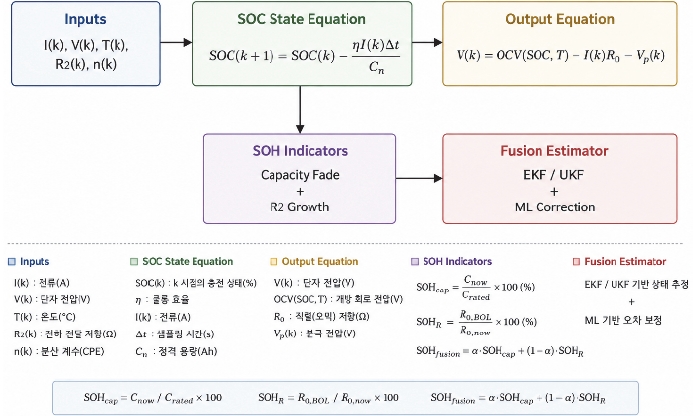
본 연구에서는 배터리의 충전 상태(State of Charge, SOC)와 건강 상태(State of Health, SOH)를 동시에 추정하기 위해 전류 적산 기반 SOC 모델과 내부 저항 기반 SOH 융합 모델을 적용하였다.
SOC는 전류 적산(Coulomb Counting)기반 상태방정식을 이용하여 다음과 같이 계산된다[
4].
여기서,
SOC(k) : k 시점의 충전 상태
η : 쿨롱 효율(Coulombic efficiency)
I(k) : 배터리 전류
Δt : 샘플링 시간
Cn : 정격 용량(rated capacity)
배터리 단자전압은 등가회로 기반 출력방정식을 이용하여 다음과 같이 모델링하였다.
여기서,
OCV(SOC,T) : SOC 및 온도 기반 개방전압
R0 : 오믹 내부저항
Vp(k) : 분극전압(polarization voltage)
SOH는 용량 감소와 내부저항 증가를 동시에 반영하기 위해 다음과 같은 이중 지표 기반 융합 구조를 적용하였다.
용량 기반 SOH는 다음과 같이 정의된다.
내부저항 기반 SOH는 다음과 같이 정의된다.
여기서,
Cnow : 현재 용량
Crated : 초기 정격 용량
R0,BOL : 초기(Beginning of Life) 내부저항
R0,now : 현재 내부저항
최종 SOH는 두 지표를 가중 융합하여 다음과 같이 산출하였다[
6–
8].
제안된 AI-BMS 아키텍처는 다차원 입력 데이터와 온라인 업데이트 기능을 갖추는 구조로 설계할 수 있으며, 칼만 필터(Adaptive Square Root Unscented Kalman Filter)는 SOC 보정 및 SOH 파라미터 추적에 적용 가능한 알고리즘 후보이다[
9].
5.4.1 SOC 보정(SOC Correction)
기존의 전류 적산법(Ampere-hour counting)은 구현이 단순하나 전류 센서 오차가 누적될 경우 장시간 운행에서 SOC 추정 오차가 증가할 수 있다. 반면 OCV(open circuit voltage) 기반 추정은 안정화 시간이 필요하므로 실시간 주행 조건에서 단독 적용이 제한적이다. 따라서 두 방식의 장점을 결합하기 위해 칼만 필터 기반 하이브리드 추정 방식을 적용할 수 있다.
예측 단계(Time Update): MCU는 센서로부터 측정된 전류 값을 전류 적산법에 입력하여 다음 시점의 SOC를 예측한다. 이 과정에서 전류 센서 노이즈에 따른 SOC 오차 공분산도 함께 업데이트한다.
보정 단계(Measurement Update): AFE로부터 실시간 셀 전압이 측정되면, 칼만 필터는 OCV-SOC 맵과 등가회로 모델을 활용하여 예측 SOC와 측정 전압 사이의 차이를 보정한다.
이후 필터는 예측값과 측정값 사이의 오차를 반영하여 Kalman gain을 계산한다.
최적 SOC 산출: 계산된 Kalman gain을 이용하여 예측 SOC를 보정하고 최종 SOC 값을 산출한다. 전류 센서 노이즈가 큰 조건에서는 전압 기반 정보의 가중치를 높이고, 전압 측정이 불안정한 조건에서는 전류 적산값의 가중치를 높이는 방식으로 추정 오차를 줄일 수 있다.
5.4.2 SOH 추정(SOH Estimation)
EIS 기반 내부 파라미터 추적: 배터리의 SOH는 전극 내부의 전기화학적 특성 변화와 밀접하게 관련된다. 본 연구에서 해석한 Nyquist plot 피팅 결과 중 R₂와 n은 SOH를 정량적으로 평가하기 위한 후보 지표로 활용될 수 있다[
6,
7].
칼만 필터는 이러한 EIS 특징량의 시간 변화 추이를 추적하여 SOH 추정값의 변동성을 완화하는 데 적용할 수 있다[
9]. 상태 변수 정의: 칼만 필터의 상태 변수로 추적하고자 하는 내부 파라미터(R₂, n)를 정의한다.
동적 모델 수립: 배터리 노화에 따른 R₂ 및 n의 변화 패턴을 기술하는 동적 모델을 수립한다.
예를 들어, 노화가 진행될수록 R₂는 증가하고 n은 감소하는 방향으로 모델링할 수 있다.
파라미터 추적: AI 추론 모델이 실시간 EIS 측정값과 운행 컨텍스트를 기반으로 업데이트된 파라미터(R₂, n)를 제공하면, 칼만 필터는 이를 측정값으로 받아들여 동적 모델과 비교·보정한다. 이렇게 추적된 R₂ 및 n의 보정값은 SOH 추정 모델에 입력되어 최종 SOH 산출에 활용될 수 있다.
5.5 데이터셋 분석
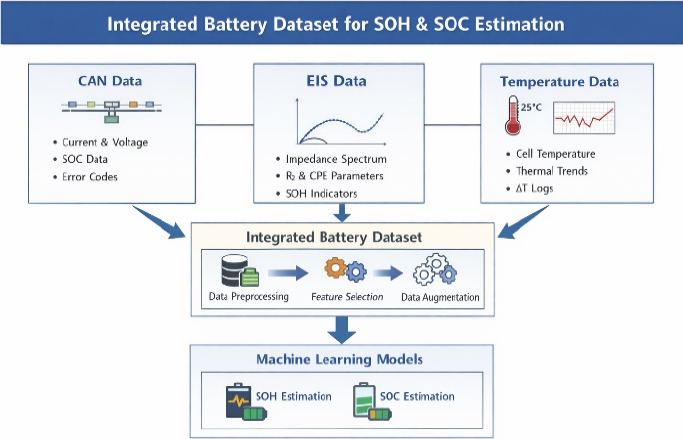
본 연구에서 사용한 데이터셋은 실차 등판 주행시험을 통해 수집된 CAN 기반 BMS 운행 데이터와 EIS 기반 내부 파라미터 데이터를 통합하여 구성하였다. 실차 주행 데이터는 48 V 150 Ah급 LiFePO₄ 배터리팩이 장착된 전동 운반차를 대상으로 수집하였으며, 주요 계측 항목은 팩 전압, 팩 전류, 셀 전압, 셀 온도, SOC, 주행 조건 및 부하 조건으로 구성하였다. 데이터 수집 주기는 1 Hz로 설정하였으며, 등판 구간에서 발생하는 순간 고전류 부하, 전압 강하, 온도 상승 특성을 분석할 수 있도록 시계열 데이터 형태로 정리하였다.
데이터셋은
Fig. 10과 같이 CAN 데이터, EIS 데이터, 온도 데이터 및 운행 조건 데이터를 통합하는 구조로 설계하였다. CAN 데이터는 실제 운행 중 배터리팩의 전기적 응답을 나타내며, 전류, 전압, SOC 및 알람 정보를 포함한다. EIS 데이터는 배터리 내부 상태를 반영하는 R₁, R₂, n, Q 등의 등가회로 파라미터로 구성되며, SOH 추정 및 열화 상태 판단을 위한 핵심 특징량으로 활용된다. 온도 데이터는 셀 최고 온도, 셀 평균 온도 및 온도 상승폭(ΔT)을 포함하며, 동일한 전류 부하 조건에서도 온도에 따라 내부저항과 전압 강하가 달라지는 특성을 반영하기 위해 사용하였다. 운행 조건 데이터는 적재 하중, 탑승 인원, 등판 조건 등으로 구성하였으며, 부하 조건 변화에 따른 BMS 보호동작 판단을 보조하는 입력 변수로 활용하였다.
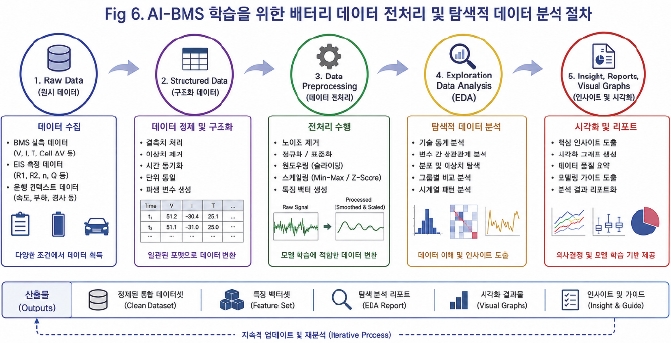
수집된 원시 데이터는 AI-BMS 모델 학습에 바로 적용하기 어렵기 때문에 전처리 과정을 수행하였다. 먼저 이상치 제거를 통해 통신 오류, 순간적인 계측 누락, 비정상적인 센서값을 배제하였다. 이후 전류, 전압, 온도, 임피던스 파라미터의 단위와 스케일을 통일하고, 시간축 기준으로 데이터를 정렬하였다. 또한 시계열 특성을 반영하기 위해 일정 시간 구간 단위의 윈도우 데이터를 구성하였다. 이를 통해 특정 시점의 단일 계측값뿐만 아니라, 고부하 발생 전후의 전류 변화, 전압 강하, 온도 상승 경향을 함께 반영할 수 있도록 하였다.
본 연구에서 확인한 실차 데이터 분석 결과, 등판 주행 중 최대 피크 전류는 −238.2 A로 측정되었고, 150 A 초과 고부하 구간은 최대 27 s 지속되었다. 또한 셀 온도 상승폭은 2°C 이내로 유지되었으며, 최고 셀 온도는 22.3°C로 측정되었다. 전압−전류 선형 회귀 분석을 통해 산출된 DC 내부저항 추정값은 0.0126 Ω로 나타났다. 이러한 결과는 OCP 임계치 판단에 필요한 핵심 특징량이 전류 피크값만으로 결정되기 어렵고, 전압 강하, 온도 상승, 내부저항 및 운행 조건을 함께 고려해야 함을 의미한다.
따라서 본 연구의 데이터셋은 단순한 BMS 계측 데이터의 집합이 아니라, OCP 최적화와 SOH 추정을 동시에 지원하기 위한 통합 데이터 구조로 볼 수 있다. 특히 CAN 기반 실시 간 운행 데이터는 주행 연속성 판단에 활용되고, EIS 기반 내부 파라미터는 배터리 열화 및 전기화학적 상태 판단에 활용된다. 향후 추가 반복시험과 장기 열화 데이터를 확보할 경우, 본 데이터셋은 Safe Current Limit, Risk Score, SOC Correction 및 SOH Estimation을 산출하는 AI-BMS 모델의 학습 데이터로 확장될 수 있다. 이를 통해 고정형 OCP 설정 방식의 한계를 보완하고, 배터리 상태와 운행 조건에 따라 보호 임계치를 동적으로 조정하는 가변형 BMS 보호 알고리즘 구현이 가능할 것으로 판단된다.
5.6 임계치 상향 조정 (250A → 280A)
실측 최대 피크 전류(−238.2 A) 대비 약 17.5%의 여유율을 고려하여 OCP 임계치를 280 A로 상향하는 방안을 검토하였다. 해당 값은 셀 규격서상 최대 지속 방전 한계인 300 A보다 낮으며, 본 시험에서 측정된 ΔT ≤ 2°C 조건을 함께 고려할 때 단기 등판 운전 영역에서 적용 가능한 후보 설정값으로 판단된다. 다만 장시간 연속 등판, 저온 조건 및 노화 셀 조건에서는 추가 검증이 필요하다.
5.7 향후 적용을 위한 온도 가변 OCP 알고리즘
골프카트와 같은 전동 운반차는 외부 노출 환경에서 운용되므로 기상 조건에 따른 배터리 온도 변화의 영향을 받는다. LFP 배터리는 저온 환경에서 전하 전달 저항(R₂)이 증가하는 특성을 보이며, 이는 동일한 전류 부하에서도 더 큰 전압 강하(Voltage Sag)를 유발할 수 있다[
8]. 따라서 상온에서 검토한 280 A 임계치를 저온 조건에 그대로 적용할 경우, 셀 전압이 보호 하한치에 근접하거나 불필요한 셧다운이 발생할 수 있다.
이러한 온도 및 SoC에 따른 R₂ 변화를 반영하기 위해 다음과 같은 가변 OCP 로직을 향후 적용 방안으로 제안한다.
상온 구간(T > 15°C): 280 A 적용
일반 구간(0°C < T ≤ 15°C): 250 A 적용
저온 구간(T ≤ 0°C): 200 A 적용
제안 알고리즘은 시스템 기동 시 실시간 센서 데이터를 수집하고, 현재 온도와 SoC를 기준으로 OCP_set 값을 매핑 테이블에서 선택한다. 이후 실시간 전류 I가 설정값을 초과하는지 감시하고, 초과 상태가 지연시간 Tdelay 이상 지속될 경우 차단 동작을 수행한다. 본 로직은 본 연구의 실차 등판 결과를 기반으로 한 확장 제안이며, 실제 양산 적용을 위해서는 저온·고온·노화 조건에서의 반복 검증이 필요하다.
6 결 론
본 연구는 LiFePO₄ 배터리팩을 적용한 전동 운반차의 실제 등판 주행 데이터를 이용하여 BMS 과전류 보호(OCP) 설정값의 적정 범위를 검토하였다. 핵심 결과는 다음과 같다.
(1) 4가지 부하 조건 중 200 kg 적재+1인 조건에서 최대 피크 전류는 −238.2 A, 150 A 초과 지속시간은 27 s로 측정되었다. 이는 기존 250 A OCP 설정값이 실제 등판 조건에서 불필요한 차단을 유발할 가능성이 있음을 보여준다.
(2) 전기적·열적 분석 결과, 최대 출력은 11.05 kW, DC 내부 저항 추정값은 0.0126 Ω, 셀 온도 상승폭은 ΔT ≤ 2°C, 최고 온도는 22.3°C로 나타났다. 이 결과를 바탕으로 280 A OCP 설정값은 셀의 최대 지속 방전 한계 300 A 이내에서 검토 가능한 후보값으로 판단된다.
(3) OCP 임계치를 250 A에서 280 A로 조정하면, 본 시험 조건에서는 등판 중 불필요한 보호 차단 가능성을 줄이고 주행 연속성을 개선할 수 있다. 동시에 셀 규격과 실측 온도 상승을 함께 고려함으로써 배터리 보호 기능을 유지할 수 있다.
(4) EIS 기반 R₂ 및 n 파라미터는 온도와 노화 상태에 따른 내부 저항 변화를 반영할 수 있으므로, 향후 고정형 OCP를 상태 기반 가변형 OCP로 확장하기 위한 입력 변수로 활용 가능하다.
따라서 본 연구의 실용적 의의는 실제 운행 부하를 반영한 OCP 설정값 검토를 통해 전동 운반차의 주행 연속성, 배터리 보호 및 BMS 신뢰성 향상 가능성을 제시했다는 점에 있다. 향후에는 반복 실험 기반 평균±표준편차, 저온·고온 조건, 노화 셀 조건을 추가하여 가변형 OCP 알고리즘의 적용 범위를 검증할 필요가 있다.
Notes
-
감사의 글
본 연구는 호남대학교 전기공학과와 ㈜셀리안츠 기술연구소의 산학협력 연구의 일환으로 수행되었다. 또한 실차 기반
등판 주행시험 수행과 배터리 운행 데이터 수집 환경 구축에 협조해 준 관계자들에게 감사의 뜻을 표한다.
-
Conflict of Interest
The authors declare the following financial interests/personal relationships which may be considered as potential competing interests: Woo-Geun Jung is affiliated with Celliants Co., Ltd., which develops battery systems, battery management systems (BMS), and battery swap infrastructure related to the subject of this study. Other than this, the authors declare that they have no relevant potential conflicts of interest.
-
Author Contributions
Woo-Geun Jung: Conceptualization, Methodology, Software, Validation, Formal analysis, Investigation, Resources, Data Curation, Writing - Original Draft, Visualization.
Jae-Ha Ko: Supervision, Writing - Review & Editing, Project administration, Funding acquisition.
Keon-Sik Hong: Writing - Review & Editing.
Data Availability
Data available within the article or its supplementary materials.
Fig. 1.Dynamic current/voltage profiles under four payload/passenger load conditions. Error bars should indicate SD when repeated-run data are plotted
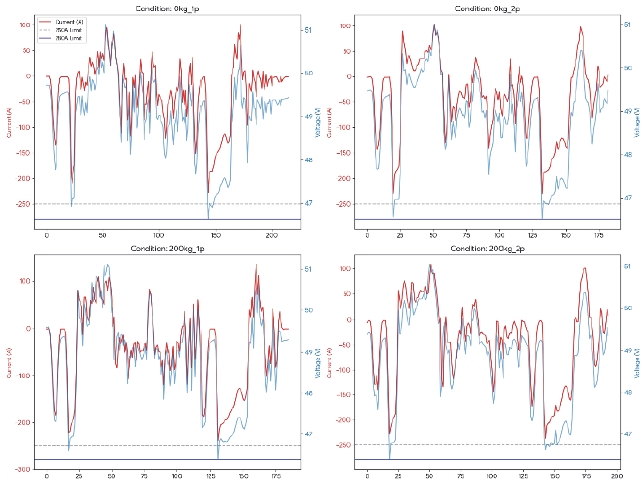
Fig. 2.Instantaneous power profile under the maximum-load condition (Case 4). Maximum power was 11.05 kW
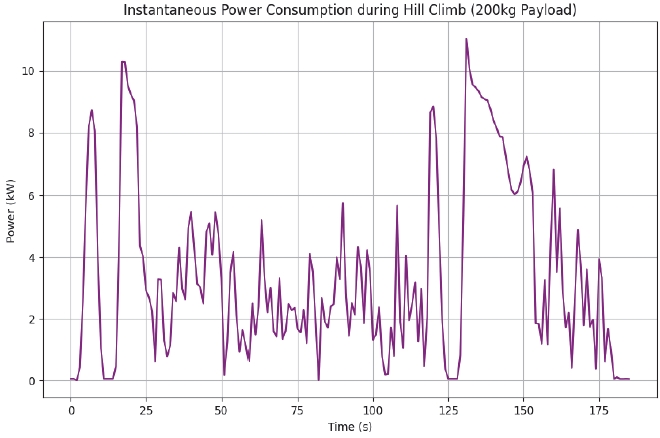
Fig. 3.Comparison of cell temperature rise (ΔT) under load conditions. Statistical error bars should indicate SD when repeated-run data are plotted (n=3); maximum measured cell temperature was 22.3°C
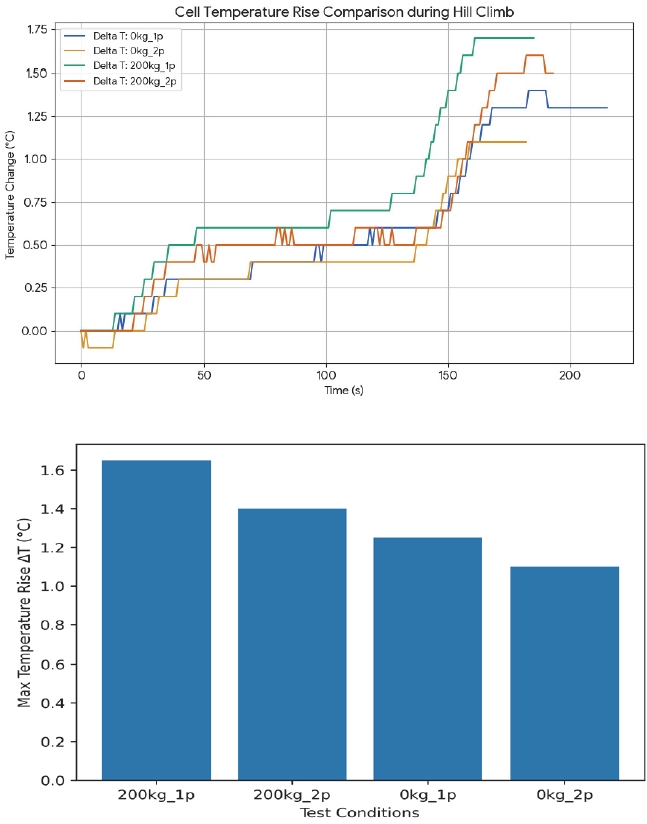
Fig. 4.Nyquist plots and equivalent-circuit fitting results under temperature and aging conditions
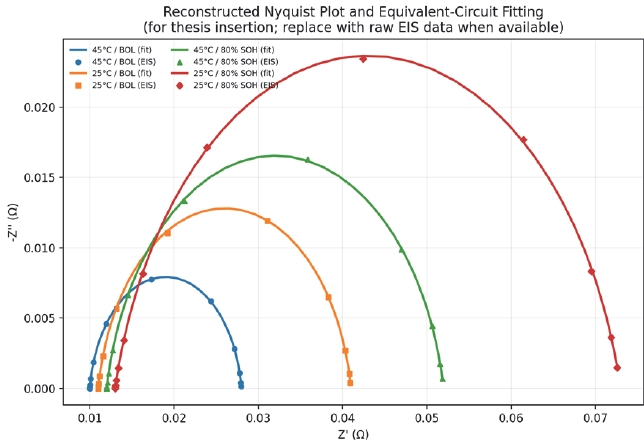
Fig. 5.Adaptive OCP control structure based on EIS features and driving data
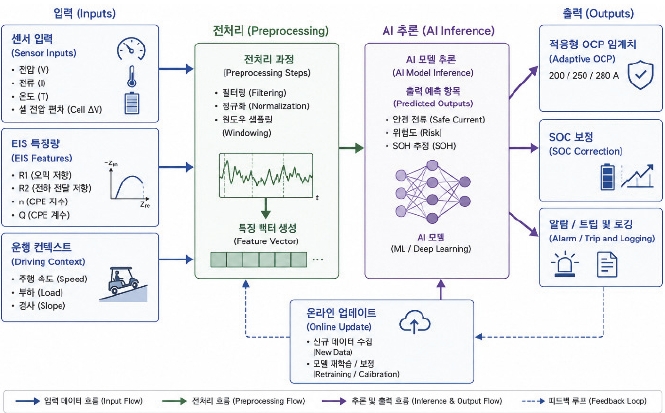
Fig. 6.Battery data preprocessing and exploratory data analysis process for AI-BMS training
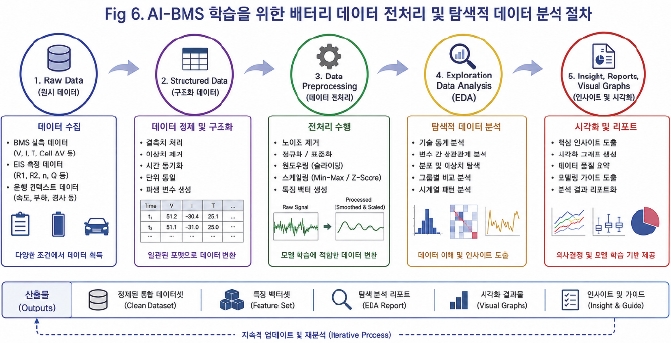
Fig. 7.SOC/SOH fusion estimation model based on internal battery parameters
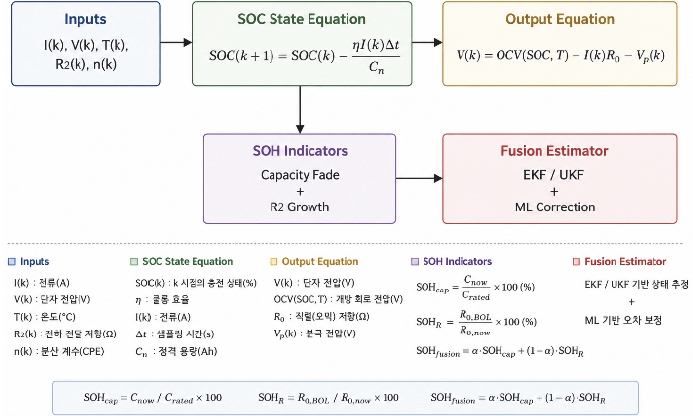
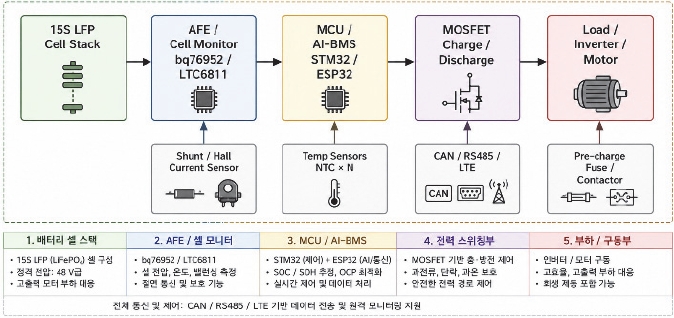
Fig. 8.AI-BMS hardware architecture for a 15S LFP battery pack
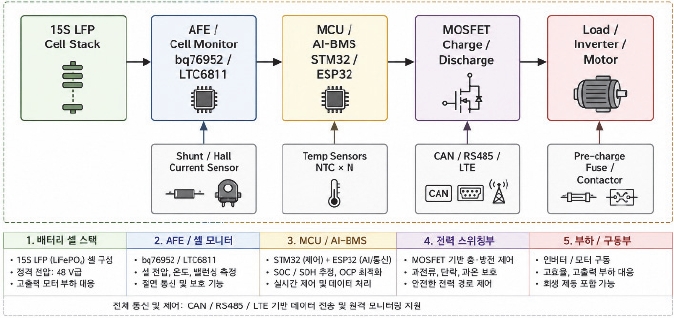
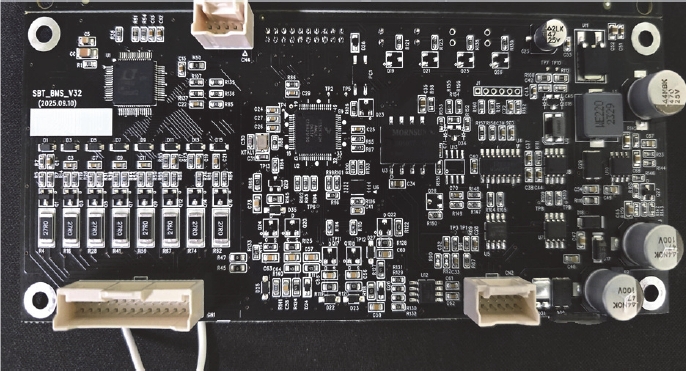
Fig. 9.BMS circuit board and main functional blocks
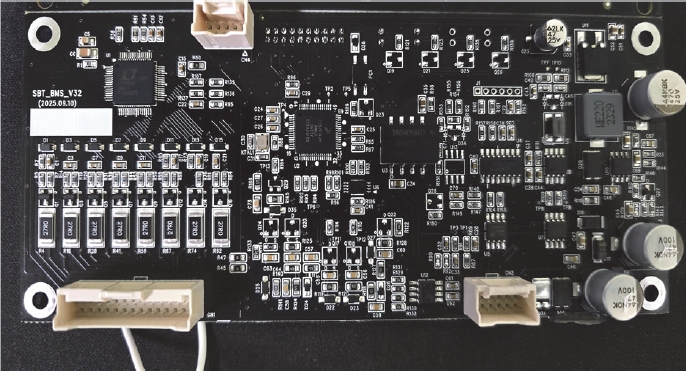
Fig. 10.Integrated battery dataset based on EIS, CAN, and temperature data and SOC/SOH estimation model architecture[
10]
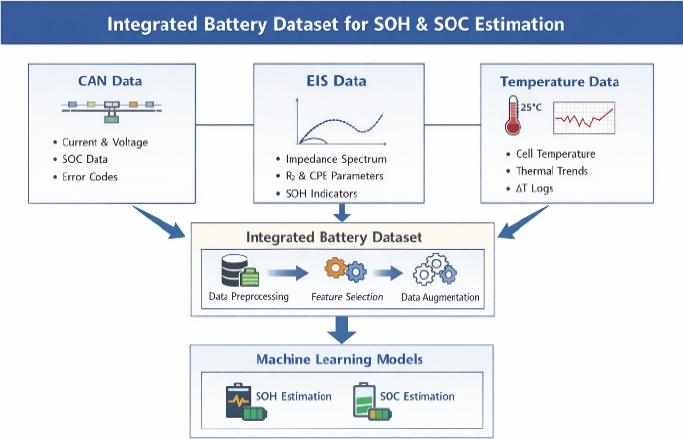
Table 1.Summary of hill climb test results under various load conditions
Table 1.
|
Table 2.Summary of hill climb test results under various load conditions
Table 2.
|
Table 3.Hill-climb test results under four load conditions. P0/P200 denote payload mass, and 1p/2p denote passenger condition
Table 3.
|
Condition |
Payload mass (kg) |
Passenger condition |
Peak current (A) |
Duration above 150 A (s) |
Minimum cell voltage (V) |
|
P0_1p |
0 |
1 |
228.4 |
14 |
3.1 |
|
P0_2p |
0 |
2 |
230.5 |
15 |
3.092 |
|
P200_1 |
200 |
1 |
238.2 |
27 |
3.084 |
|
P200_2 |
200 |
2 |
236.7 |
25 |
3.083 |
Table 4.Summary of hill climb test results under various load conditions
Table 4.
|
Load condition |
Peak current |
Time > 150A |
Min Cell V |
|
0 kg_1p |
228.4 |
14 |
3.1 |
|
0 kg_2p |
230.5 |
15 |
3.092 |
|
200 kg_1p |
238.2 |
27 |
3.084 |
|
200 kg_2p |
236.7 |
25 |
3.083 |
References
- 1. W. Puviwatnangkurn, B. Tanboonjit, and N. H. Fuengwarodsakul, Proc. 2013 10th International Conference on Electrical Engineering/Electronics, Computer, Telecommunications and Information Technology (ECTI-CON) (IEEE, Krabi, Thailand, 2013). doi: https://doi.org/10.1109/ECTICon.2013.6559591
- 2. A. K. M. A. Habib, M. K. Hasan, G. F. Issa, D. Singh, S. Islam, and T. M. Ghazal, Batteries, 9, 152 (2023). doi: https://doi.org/10.3390/batteries9030152
- 3. K. W. See, G. Wang, Y. Zhang, Y. Wang, L. Meng, X. Gu, N. Zhang, K. C. Lim, L. Zhao, and B. Xie, Int. J. Coal Sci. Technol., 9, 36 (2022). doi: https://doi.org/10.1007/s40789-022-00494-0
- 4. M. A. Hannan, M. S. H. Lipu, A. Hussain, and A. Mohamed, Renew. Sustain. Energy Rev., 78, 834 (2017). doi: https://doi.org/10.1016/j.rser.2017.05.001
- 5. Y. F. Pulido, C. Blanco, D. Anseán, V. M. García, F. Ferrero, and M. Valledor, Measurement, 106, 1 (2017). doi: https://doi.org/10.1016/j.measurement.2017.04.022
- 6. D. Li, D. Yang, L. Li, L. Wang, and K. Wang, Energies, 15, 6665 (2022). doi: https://doi.org/10.3390/en15186665
- 7. M. Fan, M. Geng, K. Yang, M. Zhang, and H. Liu, Energies, 16, 3393 (2023). doi: https://doi.org/10.3390/en16083393
- 8. X. Wang, X. Wei, and H. Dai, J. E nergy Storage, 21, 618 (2019). doi: https://doi.org/10.1016/j.est.2018.11.020
- 9. K. Wang, X. Feng, J. Pang, J. Ren, C. Duan, and L. Li, Int. J. Electrochem. Sci., 15, 9499 (2020). doi: https://doi.org/10.20964/2020.09.84
- 10. H. Mustafa, C. Bourelly, M. Vitelli, F. Milano, M. Molinara, and L. Ferrigno, Data Brief, 57, 110947 (2024). doi: https://doi.org/10.1016/j.dib.2024.110947
- 11. Chuzhou Lishen New Energy Technology Co., Ltd., LP33200207-150 Ah Product Specification, 2024.
- 12. I. Goodfellow, Y. Bengio, and A. Courville, Deep Learning (MIT Press, Cambridge, MA, USA, 2016).


 , 홍건식1